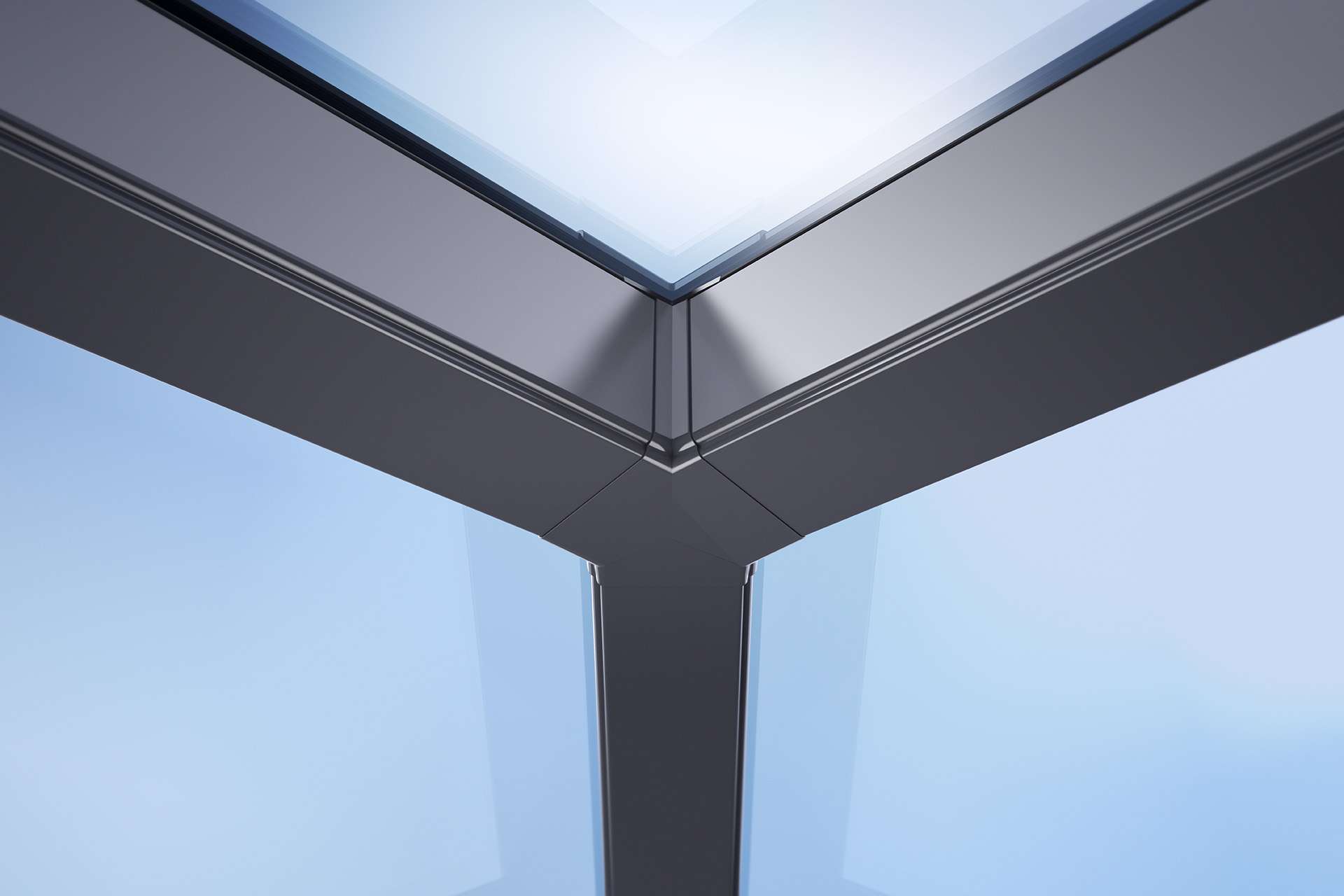
Do Roof Lanterns Need Planning Permission?
Roof lanterns are one of the most effective ways to bring natural light into a flat-roof extension, kitchen or living area. But before you commit to a design, it's important to understand the rules around planning permission and building regulations. The good news is that most roof lantern installations don't require planning permission — but there are exceptions you need to know about.
Permitted Development: The 150mm Rule
Under permitted development rights, you can install a roof lantern without planning permission as long as it doesn't protrude more than 150mm above the existing roof plane. Most modern roof lanterns — including the Korniche system we install — are designed to sit well within this limit. The Korniche, for example, has one of the lowest profiles on the market, making it an ideal choice from both an aesthetic and a planning perspective.
Permitted development also requires that the roof lantern doesn't exceed the highest part of the existing roof. In practice, this is rarely an issue since lanterns are installed on flat or low-pitch roofs well below the main ridge line.
When You DO Need Planning Permission
There are several situations where permitted development rights don't apply and you'll need to submit a planning application:
- •Listed buildings — any alteration to a listed property requires listed building consent, regardless of how minor.
- •Conservation areas — permitted development rights are often restricted. You may need planning permission even for changes that would normally be permitted.
- •Flats and maisonettes — permitted development rights generally apply only to houses, not flats.
- •Article 4 directions — some local authorities remove specific permitted development rights in certain areas. Check with your local planning department.
Building Regulations: Always Required
Even when planning permission isn't needed, building regulations approval is always required for a roof lantern installation. This ensures the work meets minimum standards for structural integrity, thermal performance, ventilation and fire safety. Your installer should either be registered with a competent person scheme (which allows self-certification) or arrange for a building control inspection.
The glazing must meet minimum U-value requirements under Part L of the Building Regulations. Modern roof lanterns comfortably achieve this — the Korniche system, for example, achieves a centre-pane U-value as low as 1.0 W/m2K, well within the required limits.
How to Check Before You Start
The simplest way to confirm whether you need planning permission is to contact your local planning authority. Most councils have a duty planner you can speak to for free. You can also apply for a Lawful Development Certificate, which gives you formal written confirmation that your proposed work is permitted. This can be useful if you plan to sell the property in future, as it provides proof that the work was carried out lawfully.
What Vitrum Handles for You
At Vitrum Solutions we take care of the regulatory side so you don't have to worry. During our initial survey we assess the planning position, advise on building regulations requirements, and handle all necessary notifications. We only install roof lantern systems that comfortably exceed minimum thermal and structural standards, so you can be confident the finished result is fully compliant.
Frequently Asked Questions
Do roof lanterns need planning permission?
In most cases, no. Roof lanterns typically fall under permitted development as long as they don't protrude more than 150mm above the existing roof plane. However, if your property is listed, in a conservation area, a flat, or subject to Article 4 directions, you'll need to apply for planning permission.
Do roof lanterns need building regulations approval?
Yes, always. Regardless of whether planning permission is required, any roof lantern installation must comply with Building Regulations. This covers structural safety, thermal performance, ventilation and fire safety. A competent installer will handle the building control notification for you.
Can I put a roof lantern on a flat roof extension?
Yes, and it's one of the most popular applications. A roof lantern on a flat roof extension transforms what can be a dark space into a bright, airy room. As long as the extension itself has the correct permissions and the lantern meets the 150mm protrusion rule, you're typically fine under permitted development.
How big can a roof lantern be without planning permission?
There's no specific size limit for the lantern itself under permitted development rules. The key restriction is the 150mm protrusion above the roof plane. In practice, roof lanterns can be very large — several metres in each direction — as long as the structural design is sound and building regulations are met.
Thinking about a roof lantern for your home?
Request a Free Quote